Things I Am Keeping From Virtual/Hybrid Learning

Oh, 2020-2021 school year. I do not miss you, but I did learn a lot last year and one of my goals for the upcoming school year is to use what I learned going forward. As of this writing, I’m not 100% sure what the 2021-2022 school year will look like (even though school starts is 2 weeks lol), but I’m doubting that virtual and hybrid learning is going to be on the table for us. However, there are still some things I want to pull from last year that I think will make my in-person teaching better.

  1. Daily Slides – I got this idea from Megan at Too Cool for Middle School. She uses this with her middle schoolers, but I think it also worked great for a year when clear communication was so important. Basically, daily slides are just a Google slide you make for each day your class meets that includes what you are doing for that day and what their homework is. That’s it. You just update this every day and put it somewhere your students will see it. If this had been a normal year, you might put this up on the board at the beginning of every class, but for me, I just embedded the slide presentation into our LMS so it was the first thing students saw when they opened up the page for our class. It’s super easy and it’s just another way to communicate with your students about what is upcoming and when due dates are. My students said they appreciated this when I had a student who was struggling to complete homework, I was able to send her parents this slide deck so that they were informed about due dates. Even though virtual/hybrid learning is likely over for my school this year, this is something I’ll probably keep doing on my LMS pages for my classes just so that students feel like they are in the loop about what is going on each day.
Daily slide for Anatomy

2. Digital Absent Binder – In the ‘before COVID times’ I used to keep a binder in my classroom that had a form I filled out whenever a student was absent and then there were folders that I would place work they needed to make up in. This year I made a digital version and it works SO MUCH BETTER. I just made a Google Slide presentation of the form that was in the binder and linked on our LMS page for our class so students had access to it. Students can get access to the work they missed right away (they don’t have to wait till they come back to school to look in a binder) and it cut down on emails from absent students asking for what they missed. This will definitely be something I continue into the new year. 
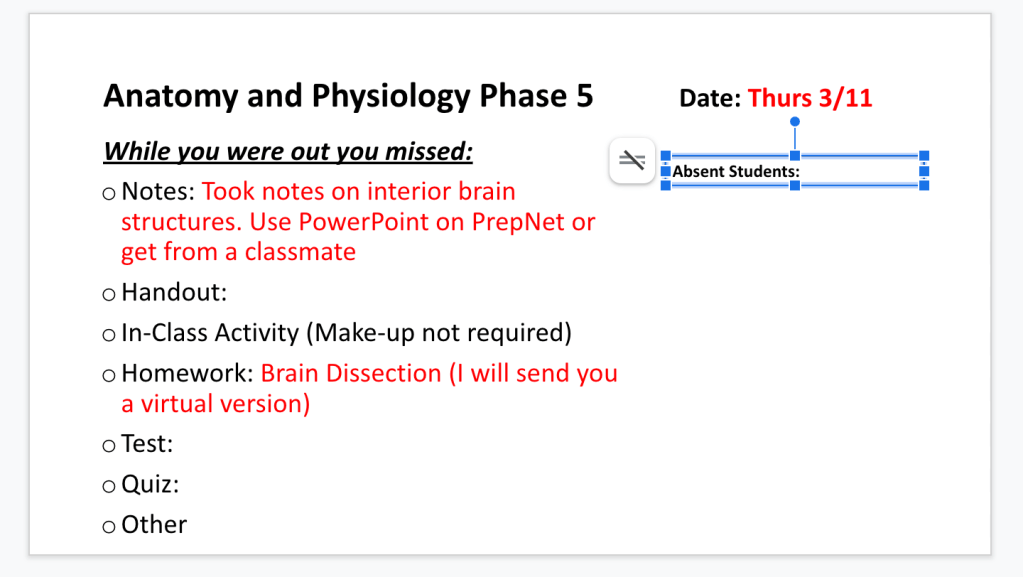
Example of a slide from my digital absent binder

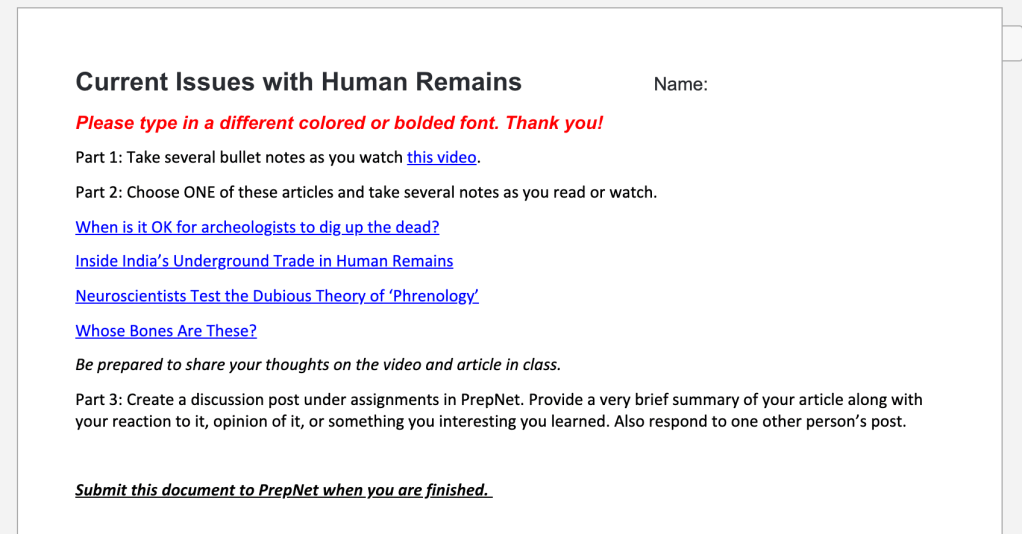
3. Social Issues/Current Event Discussions – This is something new I did in anatomy last year and I really liked how it worked. For certain units I brainstormed some topics that were connected to what we were learning about but weren’t also directly tied to science (if that makes sense). I’ve put an example of the topics I chose for our skeletal system unit below. Each topic linked to an article and students could choose any topic that interested them. After reading the article, students created a discussion post on our LMS that included a short summary of their article and their reaction to what they read. They then responded to another classmate’s post. After creating a discussion post, we would have a short discussion as a class about what they read. This gave students a chance to ask questions of each other about what they read. We had some really good conversations about the topics and I think students appreciated the connection between our topics in anatomy and real-world events/current issues. 
4. Less Paper! – I never realized how much paper I use until last year. With all our learning moving online, I think we were all pretty much forced to stop using paper for everything. As we move back into normal, in-class learning, I want to continue to use less paper when I can. I think it’s less wasteful, make copies of everything is time consuming for me, and I teach in a one-to-one school so using paper isn’t really necessary. However, I will probably go back to using paper for tests and quizzes and some class work. For example, sometimes I think filling out something like a concept map is easier with paper and pencil. But for the most part I want to continue to use less paper from this point forward. 

5. Alternative Assessments – I taught two semester electives this year and for both I used projects to assess student learning instead of tests for the entire semester. I’m really proud of this, because using alternative assessments is something I’ve always wanted to get better at. For assessments we did a variety of projects, presentations, short papers, and small portfolios. Not all of the projects were perfect in my opinion, but I can tweak them in the future and overall I feel like they were authentic assessments of what students learned in each unit. I also felt like most of the projects I assigned weren’t too taxing to grade. (In the past I have dreading grading projects and papers; mostly I think because it feels so much more subjective than grading a test and it takes longer) When I was creating directions for these projects I made sure to ask myself, ‘Is this something that is going to take me forever to read and grade?’. If it seemed like too much, I was tweak it to make it manageable. This is something I want to continue in the future even in my content-heavy classes like anatomy. Even if I mostly give tests as summative assessments, I can assign projects, once a semester for example, to break it up a little bit. 

6. Not coming to school sick! – Can we normalize this forever? I really think that in this pandemic we have learned that it’s kind of rude to be out in public when you are sick and potentially giving that sickness to other people. I think we should stress to students and teachers that it is good to stay home when you are sick so that you don’t infect other people. (Can we get rid of perfect attendance awards please?) So, I encourage you to do the same. STAY HOME IF YOU ARE SICK. (Unless you are like me and have to use your sick days for your maternity leave in which case you want to save them all up. But I digress…)

Last year was one heck of a year, but I think that there were some positives to come out of all of this too. Honestly, I hope schools reflect on this year and try some new and innovative things. This is a great opportunity to kind of ‘blow things up’ and start new with fresh ideas for what schools can do for students. I’m a little disappointed that so many schools are determined to go back to ‘business as usual’ without thinking about how we could fix things that weren’t so good in the ‘before times’. However, as teachers, we do have some control over what we do in our classrooms, and even if we can’t change everything, we can change some things about the way we teach and manage our classrooms. What are your thoughts? I would love to hear about what you want to keep from the craziest year ever! 

Take Care!
Dealing with Teacher Comparison and My Teaching Gut

This year I have started my 6thyear as a teacher in a brand-new school. As it is now November, we are almost half way through the 2ndquarter and I finally feel like I am getting the hang of a new system, new students, and new culture. This school is much bigger than the last school I taught at, and I have many other teachers to collaborate with and learn from. At my last school I was only biology, earth science, and anatomy teacher, but now I am working with several other teachers that teach the same class that I do. This has been wonderful experience for me as I am learning to grow in my teaching pedagogy and adapt to a new way of doing things. Many of the science teachers in my department worked as biochemists, physical therapists, and environmental engineers before becoming teachers and I am so blessed to work with people with so much expertise in what they teach.

This has led my think a lot about who I am as a teacher. You see, the last couple of months have led me to compare myself with my new coworkers. Sometimes I feel so inadequate as a teacher. I never wanted to be anything but a teacher and I got my teaching license right out of college and started teaching at 23. I do not have my master’s degree yet and I have never worked in a science field. I feel like I don’t have the wealth of knowledge that my fellow teachers do and I have often worried about looking like I don’t know what I’m doing. I fear that I will mess up, that my students won’t learn what they are supposed to, and I doubt that I am a good enough teacher. I’ve tried to abandon certain lessons and ways I teach and tried to adopt what other teachers do.

At the same time, I sometimes find myself pushing back at certain lessons and content covered by my fellow teachers. I may not have experience working in the science field, but I have 5 years of teaching experience and I feel like I have learned a lot about how to structure clear and engaging lessons that students both enjoy and learn from. Sometimes I don’t want to adapt to what my new coworkers do and I want to teach like I always have.

However, I don’t think either of these attitudes is helpful. Neither doubting myself as a teacher nor being prideful in my teaching and resistant to change is going to make me a better a teacher and help my students. Lately I’ve been trying to do two things:


  • Be humble and learn
  • Stick to my teaching gut


I think there needs to be a measure of both humility and confidence in teaching.  I don’t know everything and there are many areas where I can grow as a teacher, but I do have lots of teaching experience and what works for one teacher may not work for me. It is ok to stick to my own teaching gut and say no to doing things that don’t work for the way I teach. Last month I tried a new way of teaching the structure of muscles in the way that my co-teacher did that just did not work for me or my students. They got very confused and I had to go back and reteach. However, I really like the format of lab reports other teachers in my department use and I’m using them every unit. There can be balance between learning new ways of teaching and sticking with what will work for you.

tumblr_962ea500cceda67ebc68fa6fb48b1c65_0ee79256_400
Source: Tumblr

All-in-all I’m very thankful for my new school, my new students, my new co-workers, an opportunity to stretch and grow, and an opportunity learn more about myself as a teacher. As the year continues, I hope to continue to remind myself to stay humble and to stick to my gut. How about you? Have you had experience with this? How do you keep yourself both grounded and confident in your teaching when you doubt and compare yourself to others?

signature

How I Organize Paperwork

Do you struggle with the organization of paper work in your classroom? Does your desk have multiple stacks of student work, late work, absent work, evaluations, advisory activities, permission slips, budget requests, receipts, etc all over it at the end of the day? Even as an organized person, I have struggled with both keeping track of paper work. The first few years of teaching were the worst. In my first year, I just didn’t know what to expect and wasn’t prepared to have to keep track of so many physical papers, and then as the years continued and I more classes were added to my teaching load, the problem just got worse. I now teach in a school that is 1:1 with laptops and I have fewer classes to teach so the paper work is much less, but I still find that I have many papers to keep track of. Additionally, I do not have my own classroom and I move from room to room with a cart and the chance of losing and misplacing papers is huge! That being said, I’ve tried to come up with a system that gives all paperwork its own place to reduce clutter and keep my life organized.

paperwork
Source: giphy

The organization of paperwork many seem like an insignificant thing to some, but I think that it is an extremely important part of my classroom procedures. When I am the throws of a busy day, having all my papers organized in the proper places takes some of the mental work out of finding what I need for the day. Personally, I also find that a clean and organized desk takes some of the mentally clutter and stress away during a hard teaching day.

20191026_073625.jpg

First, I keep this black paper holder/drawer on my desk. This is where Iput papers that need to be dealt with today. If I need to grade or organize something that day or first thing the next morning, it goes there. When I had my own classroom, this is where I put all my papers. Anything I collected from students or was given to me by another teacher or when students needed to turn something in while I was busy doing something
else, it went there. Then at the end of the day, I would go through and organize papers into the places they needed to go.

20191028_073103

From the black paper holder, papers can go in a number of places. If the papers are homework, quizzes, or something else I collected form the whole class I need to grade, I put them in this expanding file folder that I can easily take home if I need to.

20191027_143258

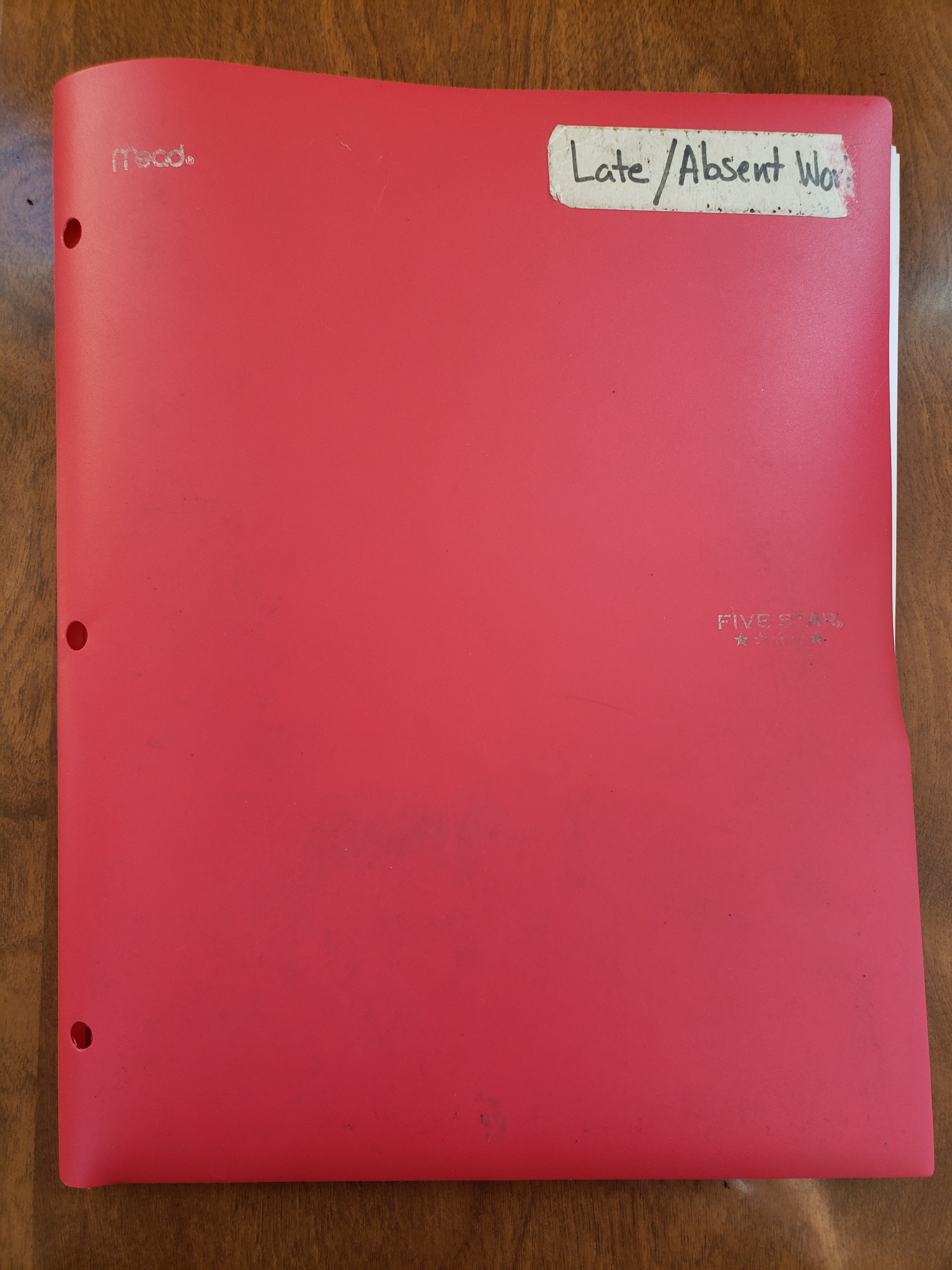
If the paper is late or absent work from a student, I put in a separate folder for late and absent work. I also keep all the hard copy keys and my paper grade book here.


If the papers are something I need to take home, I put them in the front pocket my teaching binder which is basically my plan book. If the papers are other things like advisory activities or permission slips, I keep those in separate folders that I keep on or in my desk.

20191009_090710.jpg

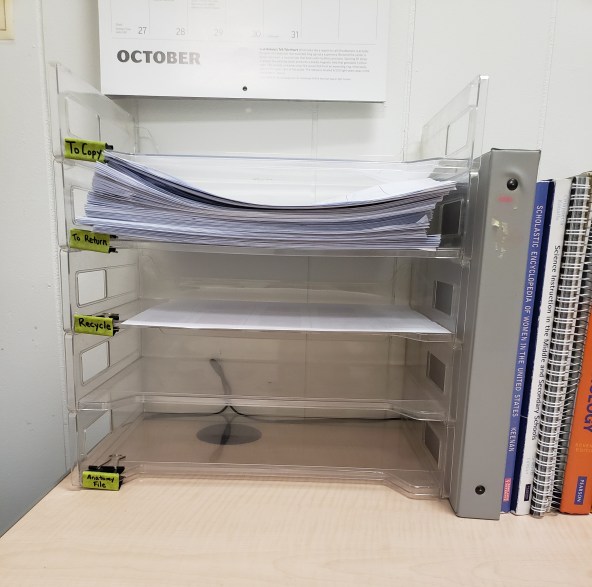
I also keep another set of paper holders on my desk. On the top file I will put any hard copies of papers I need to copy for class later. On the second file, I put work that is already graded and needs to be handed back to students. (As you can see, I did a lot of graded on this day!) On the third, I put any papers I need to recycle. (I don’t have a recycling bin in my office and need to take recyclables to the classroom across the hallway) The fourth file is empty right now. And the 5thI use to put any hard copies of things I want to file into binders.

20191028_073040

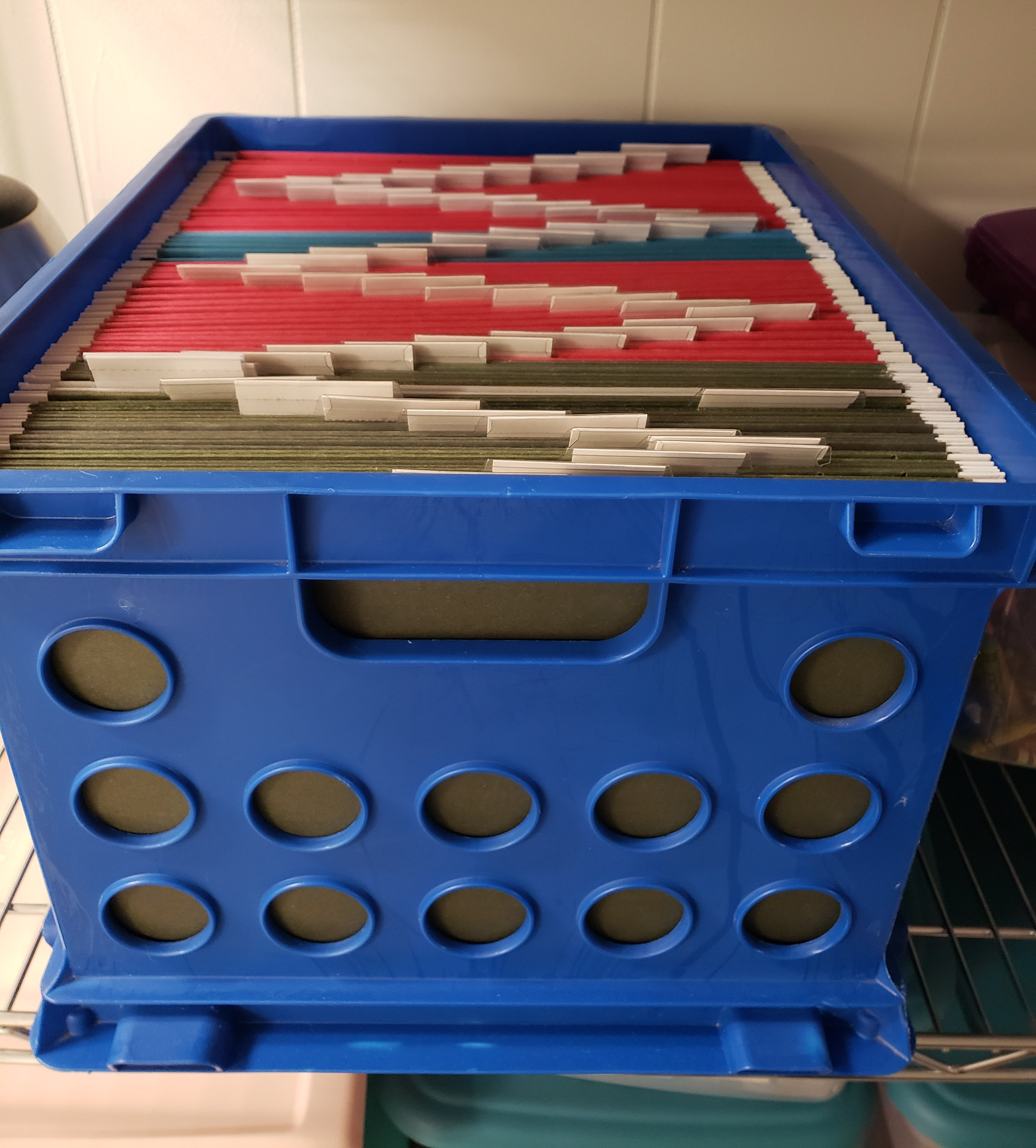
To return work to students using hanging files in a milk crate. Each student has their own file and they are organized alphabetically by last name. However, I now teach semester classes and I will gain and lose many different students when the first semester ends, so I may go to a number system instead of using last names. I like this system for graded work, because I can just take this crate out and students can get their graded work while I do something else like take attendance or set up a lab or help another student.

20191009_090729

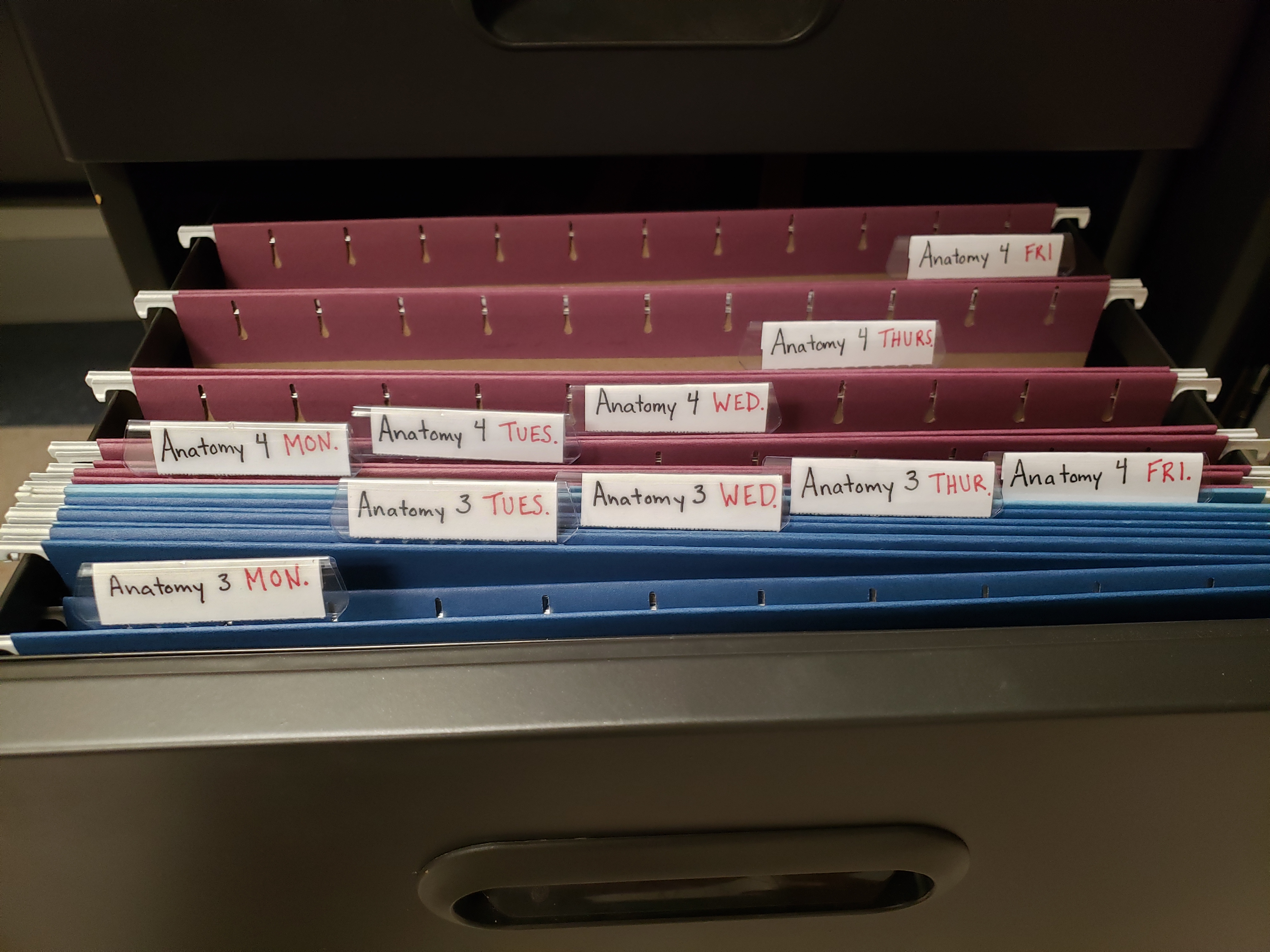
Next, I keep hanging files in my desk to store copies of things I will use in my class later in the week. For example, I give my students a short quiz every Friday, so if I’m planning ahead and make copies of the quiz on Wednesday, I put those copies in the hanging file for Friday so they are out of the way and not just sitting in a pile on my desk. When I had my own classroom, I kept files in an upright file holders like the one pictured on the right. I had one file holder for each day of the week and each class had a file in each holder. I would keep my copies for the week there and then I could just pull out the files in the morning and I had all my copies for my classes organized in a place where I could easily grab them.

20191026_073526

20191026_073551

As I said before, I travel from classroom to classroom with a cart this year so I use this fold holder on my chart to keep papers organized. The front file is where I put copies of papers to give to students and then the files behind are for each section of that class. So on Fridays I will take quizzes out of the first file and then when I collect them for my period A class, they will go in the A file to be taken back to my office for grading.


As teachers, we make so many little decision during the day that when combined can become exhausting. Don’t let finding and keeping track of paper work take up any more mental space in your busy teacher brain! This is how I combat mental and paper clutter, but you can come up with a system that works for you that gives every paper it’s proper place.

signature


5 of My Favorite Blogs for Teachers

Happy October everyone! I hope your school is off to a great start! I don’t know about you, but it feels like September has just flown by! I’ve been so busy adjusting to a new school and getting to know my new students that I feel like I’ve barely had time to catch my breath!

For this blog post, I wanted to compile a very short list of blogs for teachers that I have repeatedly gone back to over the years for ideas, resources, or encouragement. My first year of teaching I did not really have a mentor that I felt like I could bounce ideas off of and I felt a little isolated as I tried to keep my head above the water of first-year-teaching. I went to the Internet for a lot of advice and ideas for things like classroom management and organization and I found some very helpful blogs that I still visit on a semi-regular basis.

I am a high school science teacher, but these blogs are good for any teacher of any age or subject. Here are some of my favs:

  1. Teaching Sam and Scout: Elizabeth is a high school English teacher and blogs about her life as a mom in addition to her life as a teacher. She has great ideas for English lessons, but she also has great advice for classroom set up and organization. I went to her blog a lot as a new teacher for ideas when I got my first classroom and for setting up my first syllabus. She has great stuff for new teachers and great blog posts about teacher life in general for veteran teachers too!


  1. The Effortful Educator: Blake Harvard teaches AP Psychology and his blog focuses on applying scientific research in memory and cognition in the classroom. Once of my goals for this school year is to incorporate more teaching techniques that are backed by research into my units, so I’ve been going to Blake’s blog a lot over the last couple of months. I follow a lot of teachers on Instagram where I feel that sometimes the focus can seem to be more on educational trends/buzzwords and lessons that look good on social media and classroom decorations than on actual teaching techniques and this blog has been a good balance to all of that. Don’t get me wrong, I love teachergram and I’ve gotten so many good ideas from it, but Blake’s blog reminds me to keep my focus on how can help my students actually LEARN and REMEMBER content rather than on finding lessons that will look good on Instagram.


  1. The Learning Scientists: This a website and blog that is similar to the Effortful Educator in that it focusing on applying cognitive strategies backed by science in the classroom. There are so many great blog posts and resources for teachers about the science of learning, what we have learned about learning from research, and how to improve instruction. There are also great resources for students on how to make the most out of studying!


  1. Leading, Learning, Questioning: Aaron Hogan is a principal and has written a book called Shattering the Perfect Teacher Myth which I have read and recommend if you are feeling burnt out in your teaching. His blog is also great for reading when you are feel disillusioned and need some inspiration. I also think his blog is especially great for ideas on getting to know students and build rapport with them from the first day of school to the last. Sometimes I like to read his blogs just to remind myself that building relationships with my students if one of the most important things I can do as a teacher.


  1. Eat, Write, Teach: I love this blog so, so, so much and it’s probably the one I’ve read the most over the last 5 years. Stephanie is an English teacher, so she has great ideas in her content area, but she also has amazing ideas for classroom management and organization. She writes about technology, her classroom set up, and all sorts of new things that she tries out in her classroom each year. If you are a so-to-be teacher and want to know what teaching is really like, you need to read this blog. I appreciate how honest and authentic Stephanie is and I’ve gotten so much inspiration from what she does in her classroom. I can’t recommend this blog enough! Check her out!!

That’s it! I hope through these blogs you might be able to find some inspiration for your own classroom! Comment below if you following any of these blogs or have other recommendations!

signature

Six New Things I Tried Last Year

Last month I shared some of the best new labs I did last year, and this month I wanted to share a couple more new things I tried in my classroom last school year. These are non-lab activities or organizational things and most are non-grade specific and could be used in any classroom!


  1. Investigate the Teacher: This is an activity that I did with a few of my classes on the first day of school and I got this idea from the wonderful Abby Gross on Instagram. You can find here account here. At my school, our classes are slightly shorter than normal on the first day and there isn’t enough time to go over the syllabus or do a long activity. For this activity you give your students a form and they walk around your classroom, look for “evidence” that says something about you, and they try to draw conclusions about who you are. This activity is easy, gets kids out of their chairs on the first day, and gives me a chance to observe them and get to know them a little. They also get to know me as a teacher and a person. I really loved this and I think it helps set the tone of what my classroom is like and starts the process of relationship building. Abby (who created this resource) is an English teacher but the concept of collecting evidence and drawing conclusions works so well for a science classroom too! You can find this activity on TPT here.


  1. Get to Know Students RIGHT AWAY: I read two great books last summer:
    Shattering the Perfect Teacher Myth 
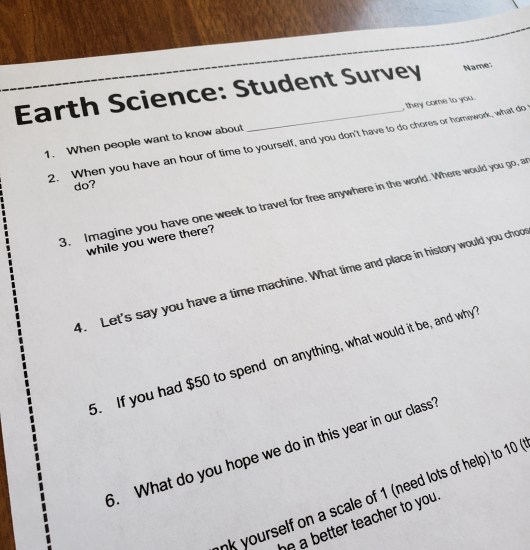
    by Aaron Horgan and Better Than Sticks and Carrots by Dominique Smith, Douglas Fisher, and Nancy Frey. Both books really emphasized the importance of building relationships with students as the foundation of classroom management and in order to building a caring and safe classroom environment. However the books both went further in suggesting that teachers need to intentionally build those relationships right at the beginning of the year and gave some practical solutions for how to do this. I took a student survey out of Sticks and Carrots, adapted it slightly, and then gave it to all my freshmen at the beginning of they year. Then I read every single one and I do think this helped me learn who my 20190715_102722students were quickly. I liked this survey better than most that I have used in the past because I thought the questions were somewhat different from the typical get-to-know-you questions. Additionally, I took some ideas out of Aaron Horgan’s book about having positive, everyday interactions with students to build relationships. You can read more about this on his blog post here. I have always tried to get to know my students at the beginning of the year, but I truly think that putting positive relationships at the forefront of my mind this school year really made a difference.
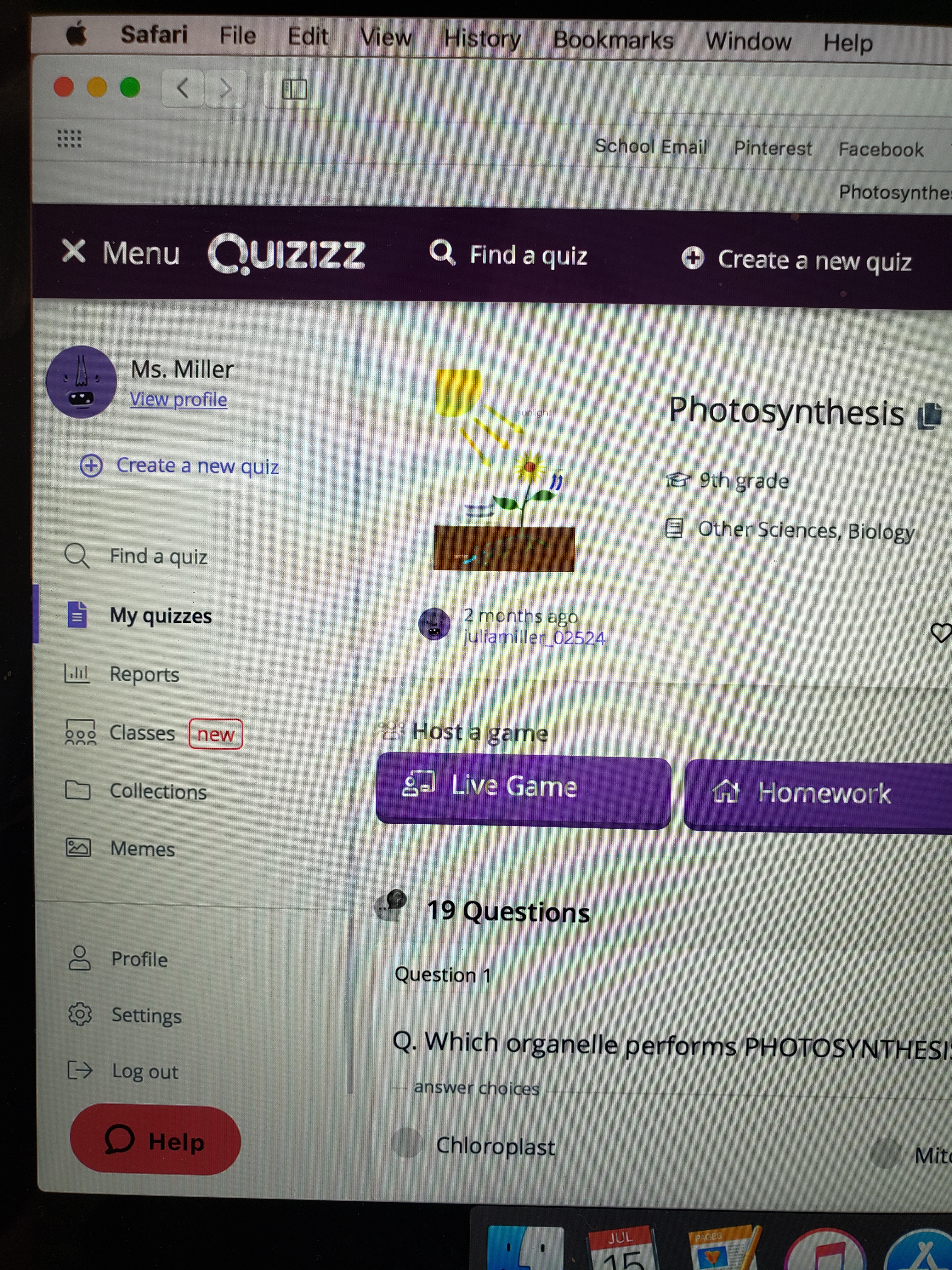
  1. Quizizz: If you are not using Quizizz in your classroom, you need to! This website was a game changer and saved me a lot of time this last year. Quizizz is an educational game website similar to Kahoot, but I think it is much easier to use and has more useful features. You can create multiple choice question quizzes for students that they can take individually at their own pace or the whole class can complete together similar to what you do with Kahoot. Here is why Quizizz is better though: the quizzes are much easier to make than on Kahoot, you can also assign these quizzes as homework where students can take the quiz as many times as they want until they get the grade they want, Quizizz generates a report for each student20190715_111353 that you could import into your gradebook AND you can email this report to parents (I love this feature!), and it’s FREE! I used this in all my classes this year from freshmen Biology to Anatomy which was composed of all juniors and seniors and it was successful with all of them. You can also use this in a middle school classroom. (Sidenote: I have also Gimkit in my classroom and my students love it, however I find that the free version is harder to use and I didn’t really want to pay for the upgraded version) If you are curious about this tool, check out this YouTube video that I watched before I started using Quizizz.
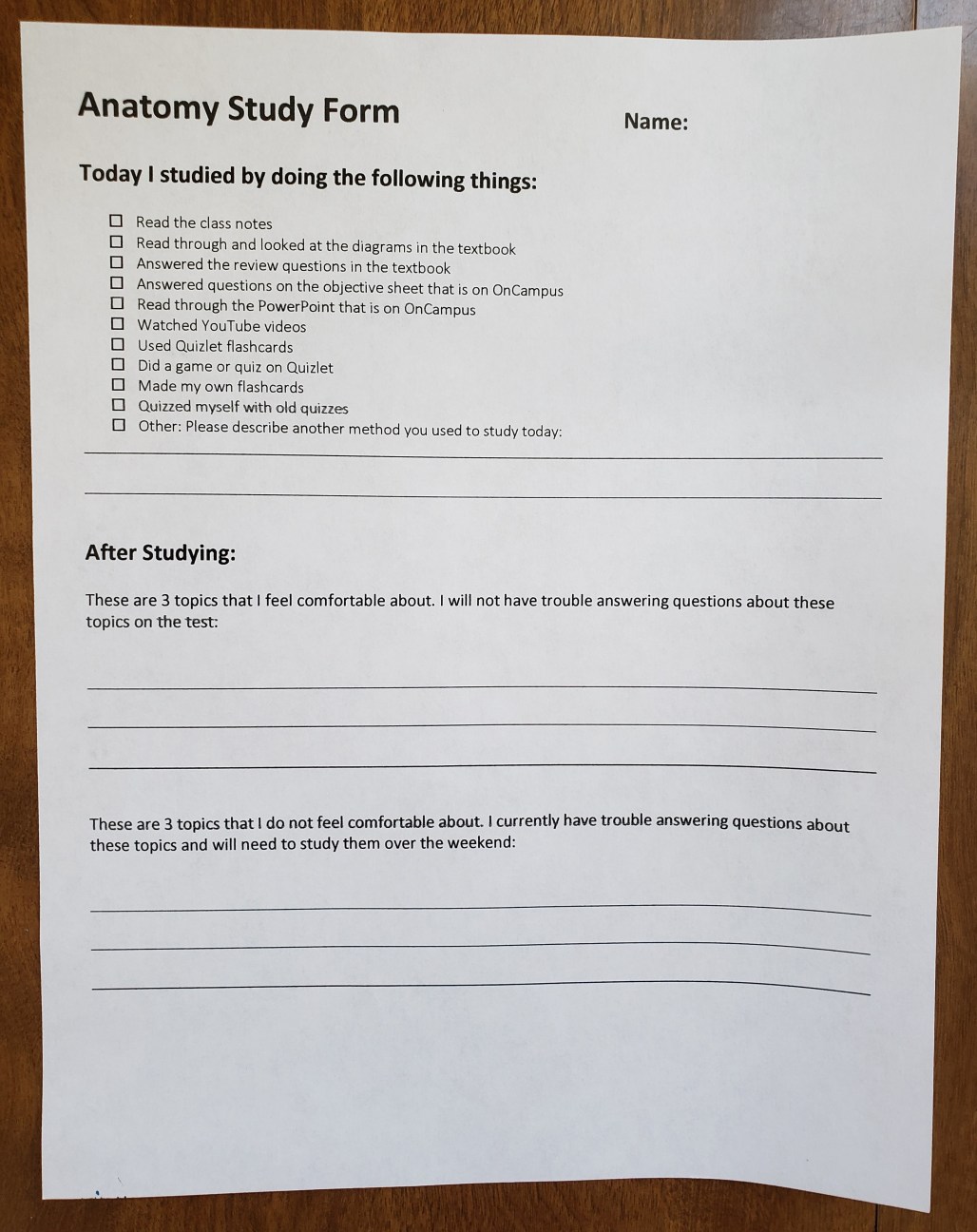
 

  1. Starbucks Study Time: This is an idea I got from Megan Forbes’s Instagram page @toocoolformiddleschool but I know a lot of other teachers do this too. Student are allowed to study or work on something independently and quietly while listening to their own music and eating snacks (if they are allowed to) just like they are at Starbucks. It’s a way to hopefully teach students how to work on their own just like they would if they were in college. I did not do this with my freshmen or sophomore students as most of my classes this year had a hard time holding themselves accountable with independent work, but I know a lot of middle school teachers who do this for short, 15 minute segments with success. I mostly used this with my Anatomy class of juniors and seniors and it worked great. Anatomy is so content heavy, that a day of independent study is great for them and many of them will be in college next year doing something like this everyday on their own. Additionally I have all my students fill out a form (pictured below) that explains how they used this time to study, what topics they feel confident about, and which topics they need to study more and I have them turn this into me at the end of class. I love using this time not just for students to work and study, but also for them to reflect on what they know. You can find Megan’s instructions for “Starbucks Time” here.

20190715_102754

  1. Switching Up My Biology Units: This year I took a page out of Rebecca’s wonderful blog https://itsnotrocketscienceclassroom.com and switched up the order of some my biology units. I used to teach ecology during the first semester right before Christmas, but this year I taught it at the end of the year right before genetics and heredity. My students typically always like the ecology and genetics units more than others and in her blog Rebecca argues that putting “fun” and activity-heavy units toward the end of year helps keep your students engaged during those last weeks of school and I have to say I agree. I think teaching these units in April and May kept everyone engaged and interested during the time of year when everyone is usually jumping off the walls. You can read more about this from Rebecca’s blog post here. I know this is biology specific, but even if you don’t teach biology and find that the end of the year is a struggle in your classes, is there a unit or activity you could save for the end of the year that would keep your students engaged? It might be worth switching things around!

And finally:

  1. I Gave Less Homework: Let me begin by saying that I am not a no-homework type of teacher. I do give my students assignments and projects that we start in class and they are expected to finish on their own, but this year I gave fewer assignments than I have in previous years. This last year was my fifth year of teaching, and honestly, I was just tired and hitting the point of burn out. Additionally, I had four different classes to prep for and all that planning and grading really builds up. And I mean really, really builds up. I was tired of grading for hours on Sundays so I dropped a couple of the assignments I normally give and I do not regret it. A couple of years ago I NEVER WOULD HAVE DONE THIS. But as I get older I think it’s important to remember that as teachers we need to keep our teaching MANAGEABLE with the rest of our lives and what I was doing in previous years was not manageable. NEWSFLASH: it’s ok to give ourselves a break.


If you getting ready to go back to school or simply looking for new ideas for you classroom, I hope that you have found something here you can use and implement.

Have you recently tried a new activity in your classroom with success or have you tried one of things I listed above?  I would love to hear about it in the comments below!

signature

Best New Labs I Tried This Year!

With the 2018-2019 school year in the rearview mirror, I spent a little time last week reflecting on the year that was. In doing so, I realized that I am very proud of the effort I put into trying new activities in my classroom. However, this is also one of my greatest weakness as it also makes my life harder with extra planning and, with 4 different preps last year, it can drove me a little crazy too!!! After I reflected on all the new things I did this year, I wanted to bring to you some of the BEST new labs/activities I tried in my classroom in case you looking for new ideas for your classroom. (I know it’s only June, but I know someone out there is already thinking about next year!) Now,  not every new idea I tried this year worked out well, but the labs I’ve listed below are definitely keepers that I will be using in the years to come. Last year I taught Biology (regular level and an honors level, Earth Science, and Anatomy and I’ve included activities for each of these classes.

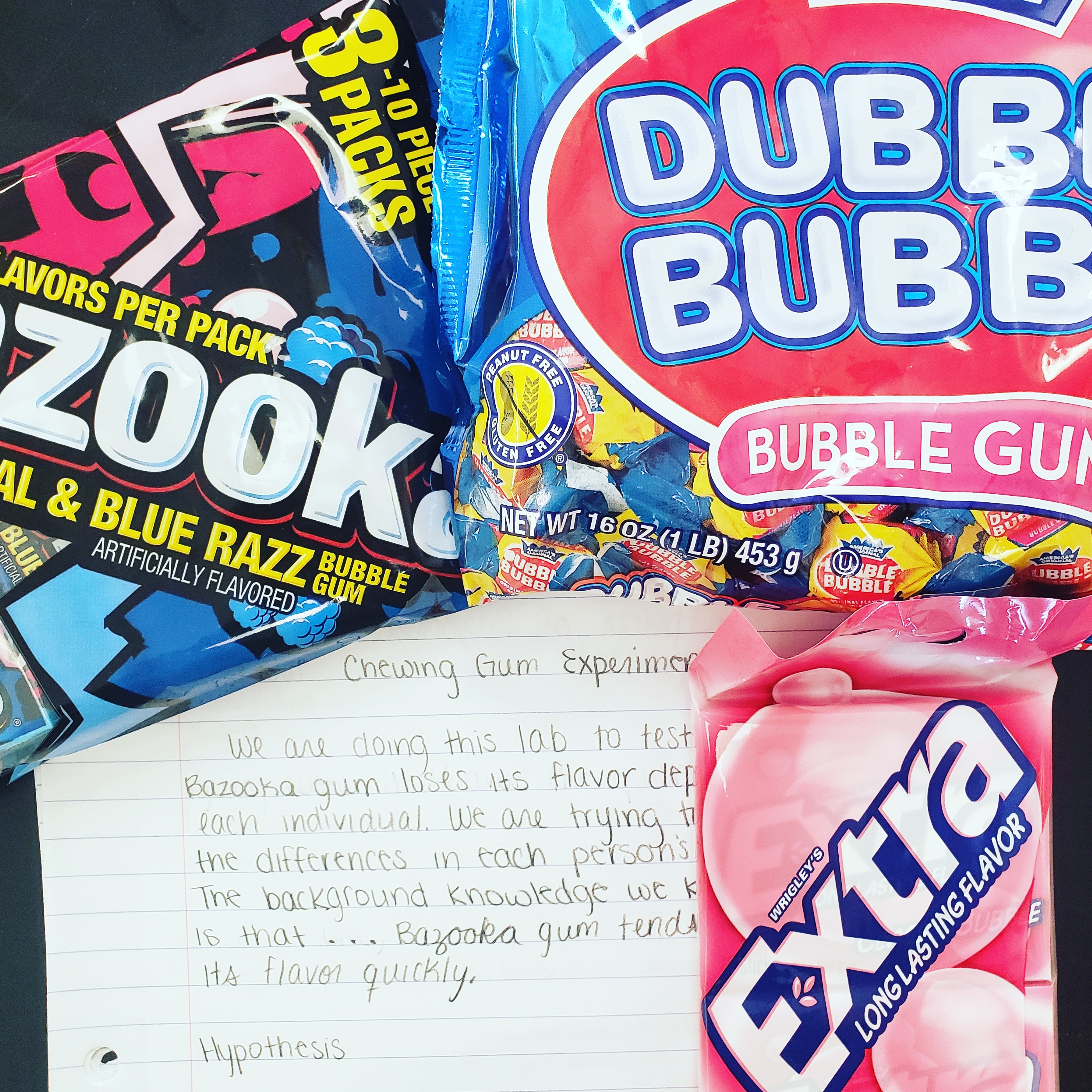
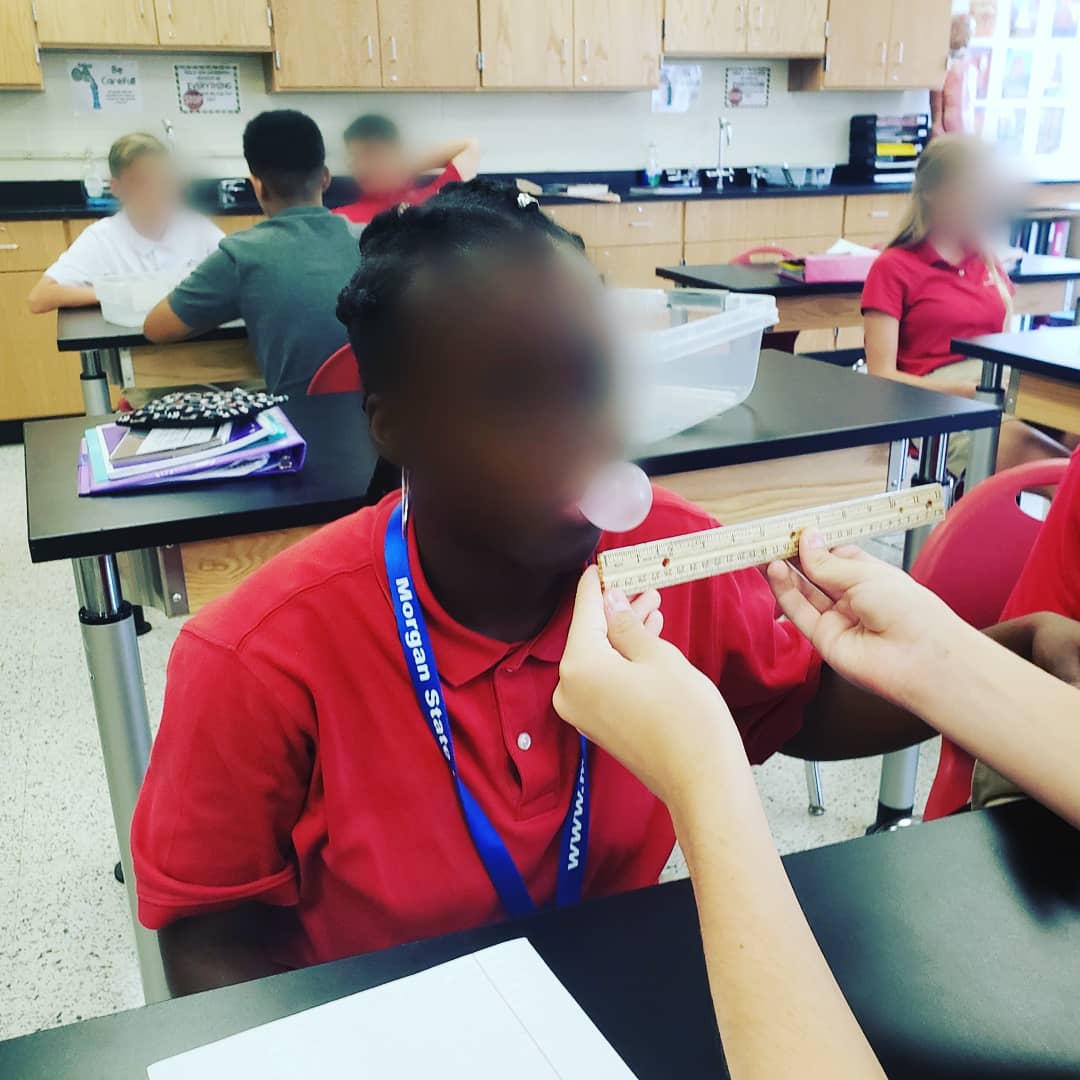
  1. Bio: Bubble Gum Lab– I did this as my first lab in my Biology class this year, to introduce lab expectations and lab report requirements. In my regulaIMG_20180905_171125_151r Bio class, I gave my students several brands of chewing gum and told them to design an experiment that would find which brand blew the biggest bubble. In my Honors Bio class, I gave my students the different brands of gum, but they designed an experiment that tested anything they wanted. Some tests bubble size and some tested which brand held its flavor the longest. I’m so glad I did this lab because it’s inquiry-based, students learn and practice experimental design, it has easy set up, and it’s FUN! You can find more descriptions abouIMG_20180906_155113_092t this lab on Mrs. Miko’s wonderful blog: Refuse to Reinvent the Wheel (https://refusetoreinventthewheel.wordpress.com/2015/01/04/the-ultimate-bubble-blowing-champion/)
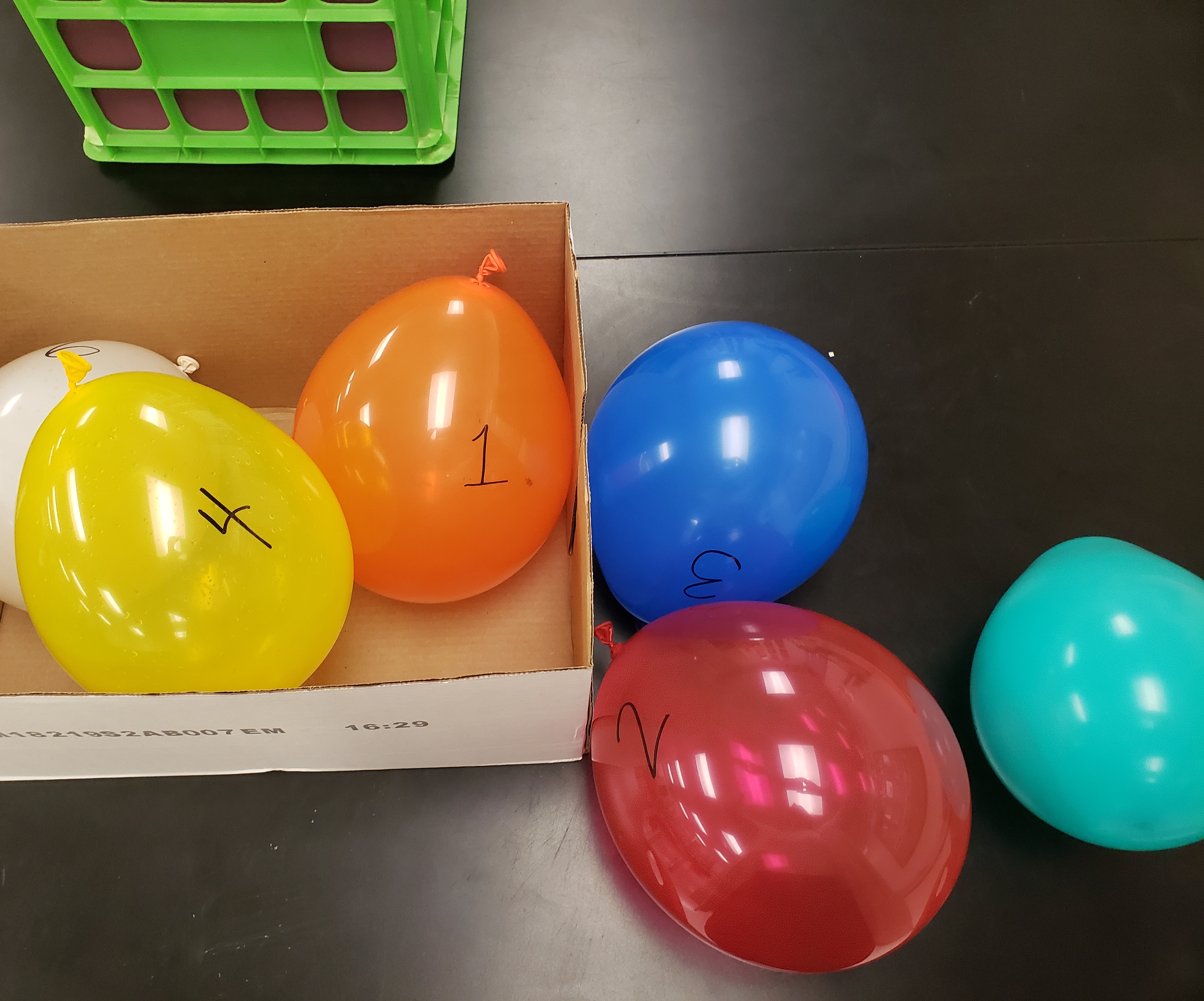
  2. Bio: Balloon Diffusion Lab– Most years when I teach cell transport through the cell membrane (diffusion, osmosis, active transpoIMG_20181129_171704_794rt), I do a lab where students put starch and water in a little piece of dialysis tubing, tying it off, put it in a glass of water, and drop iodine into the glass. The students then watch the iodine diffuse into the dialysis tube turning the tube blackish/blue. I really love this lab, BUT my biology class had some issues with appropriate lab behavior this year so did a balloon diffusion lab instead. I adapted this pdf from Flinn scientific (https://www.flinnsci.com/api/library/Download/d38c19c446cc40d9b52270ae3187e268) to fit my needs and worked pretty great. Essentially, you put different extracts into the balloons, the smells from the extracts diffuse out, and students try to get what smell each balloon contains. This particular class probably learned more about diffusion from a simple demonstration like this than from the dialysis tubing lab, and it was a great reminder for me that more complex labs don’t necessarily mean better learning.
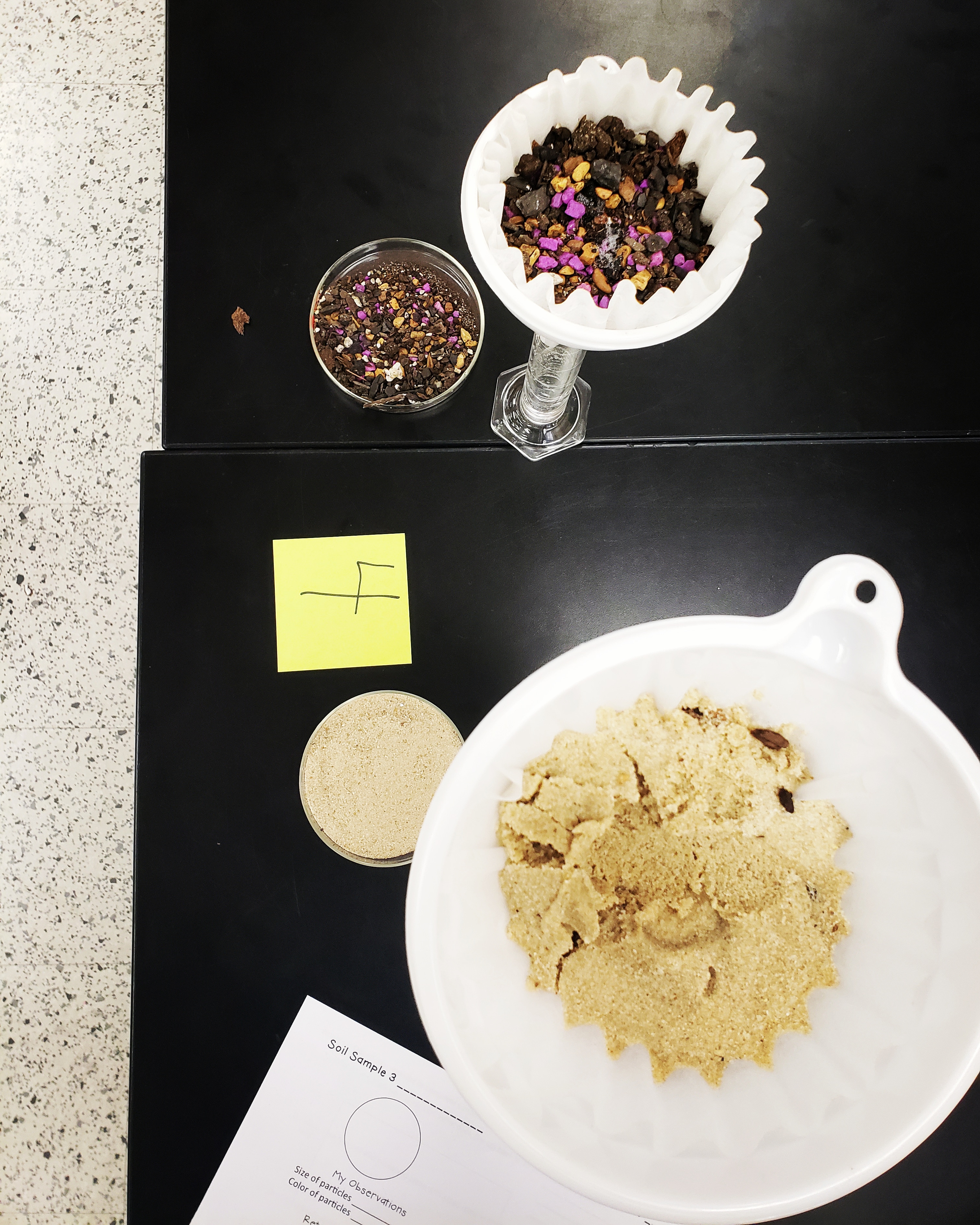
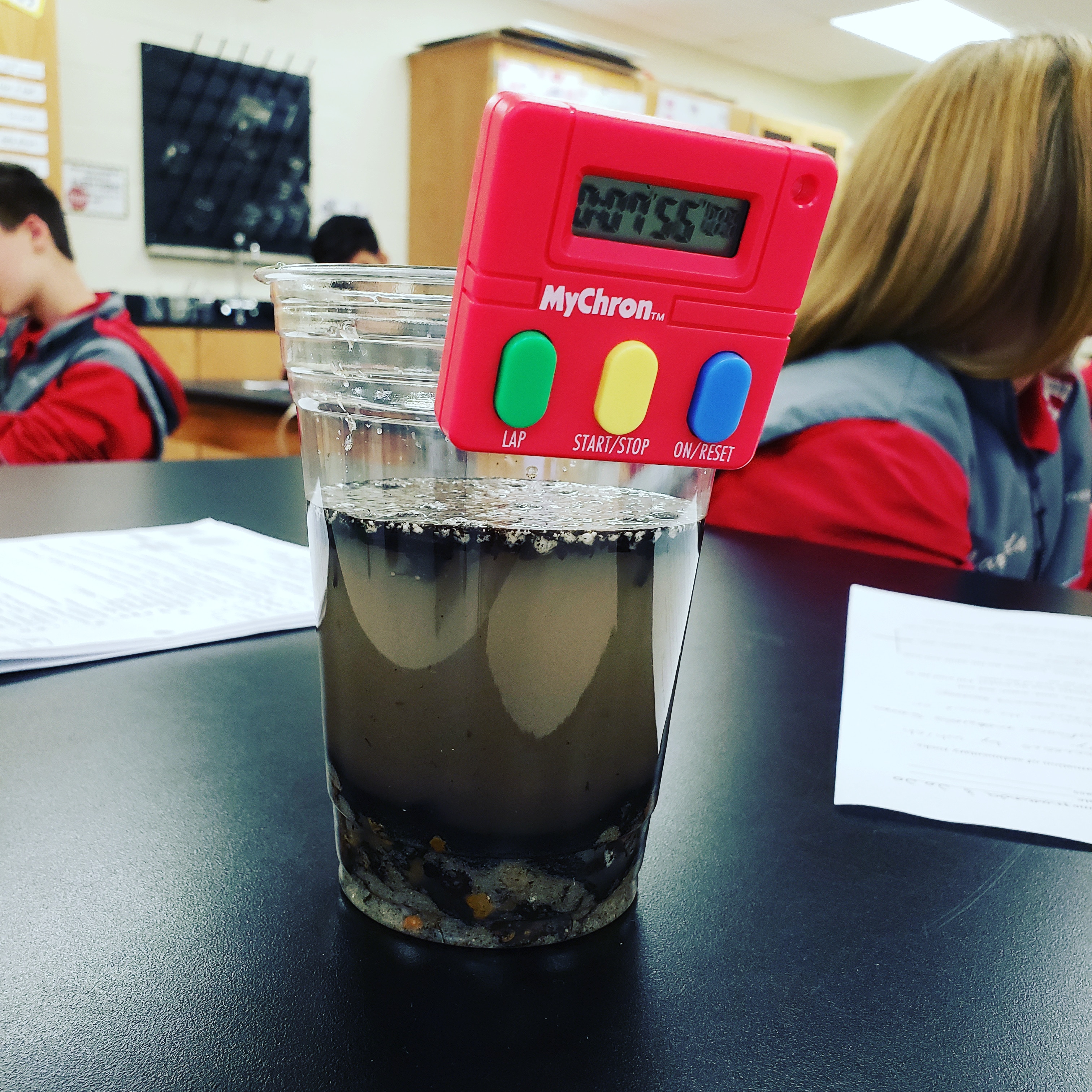
  3. Earth Science: Erosion Lab– In a similar vein to the balloon lab, I did this lab in attempt to make my life easier. (I had 4 different lab classes to prep for last year and sometimes you just need to make your life more MANAGEABLE amiright???) In my earth science classes I have tried so many different landslide labs when we learn about erosion. They have all been rather messy and time consuming and I am sick of hauling very heavy bags of sand from Home Depot into my classroom! This FREE lab from Ari at The Science Penguin (https://thesciencepenguin.com/2012/11/soil-the-capacity-to-retain-water.html) worked well and met my needs! This lab focuses on the water retention of different soils and not on erosion specifically, but I added some additional analysis questions and my high school students were able to draw connections between the two concepts. IMG_20190109_170437_757
  4. Earth Science: Sedimentary Rock Lab– I’ve tried several times and without much

    IMG_20181114_164853_623
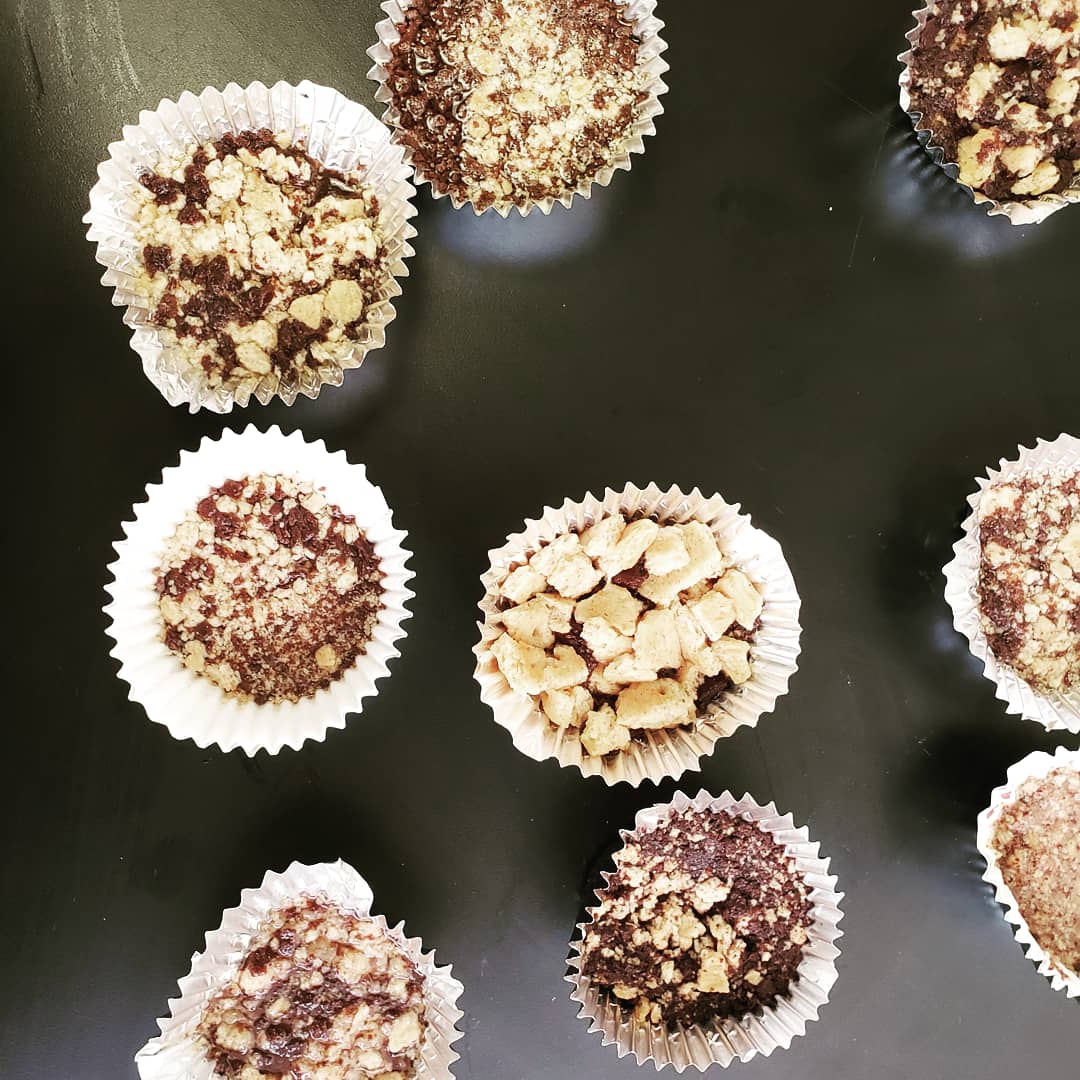
    Sedimentary “rocks” made of graham crackers and sugar water

    success to make sedimentary rocks in plastic bottles or paper cups with different materials found outside. It takes too long for the materials to dry and turn into “rocks” and my students never really get a clear picture of sedimentary rock formation. This year I used a lab I found TPT from Mrs. Ruff (https://www.teacherspayteachers.com/Product/Sedimentary-Rock-Lab-Edible-Rock-Cycle-2085993) We were able to clearly see graded bedding in the first part of the lab and using graham crackers and sugar water to make sedimentary rocks in the second part of the lab gave my students a much better understanding of weathering, erosion, compaction, and cementation.

    IMG_20181113_165855_759
    I put a mixture of different soils and sand in a bucket of water and then poured a little bit in a clear cup for each lab group. Students then timed how long it took for the different materials to settle out and showed them how graded bedding works.
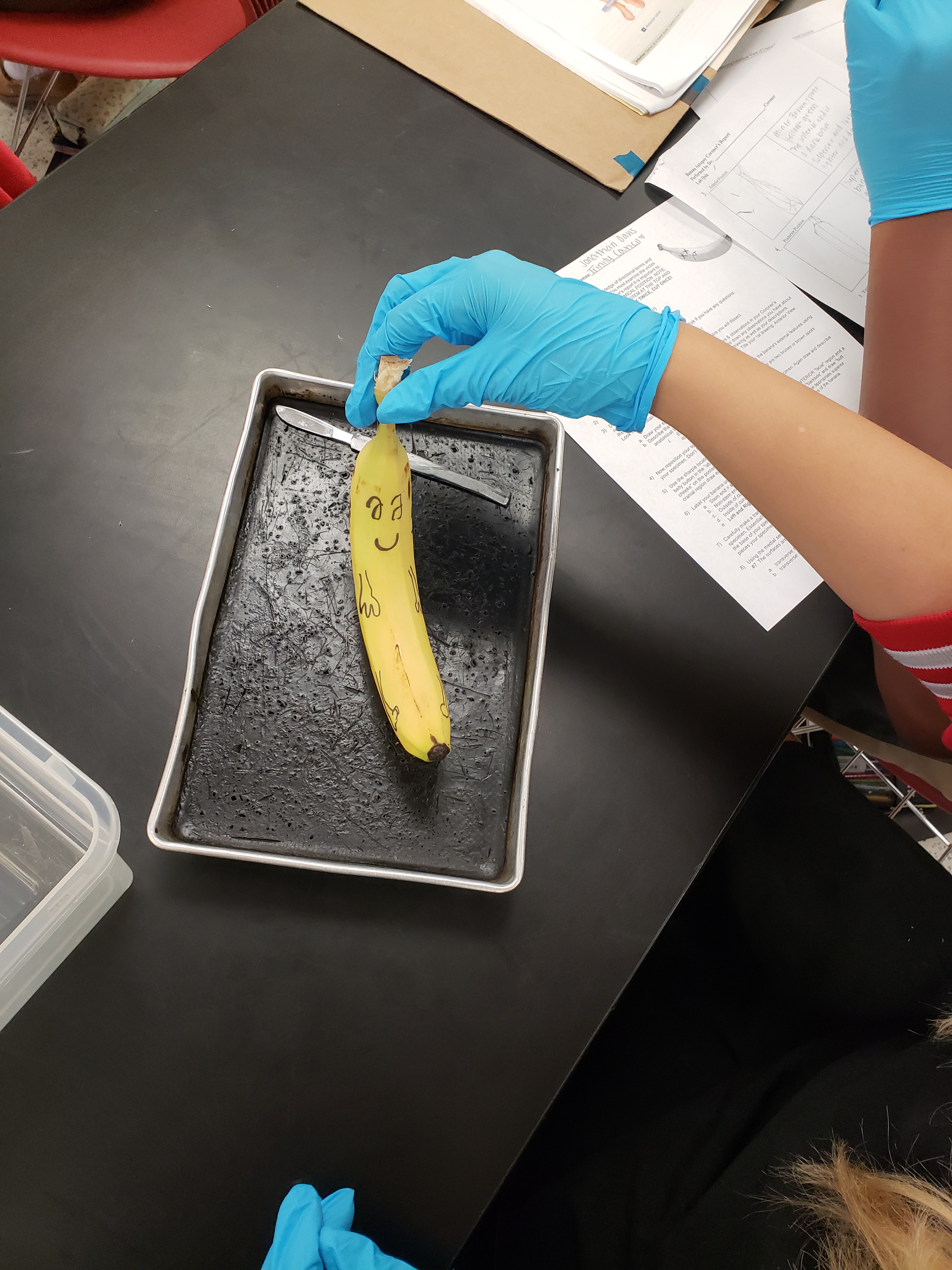
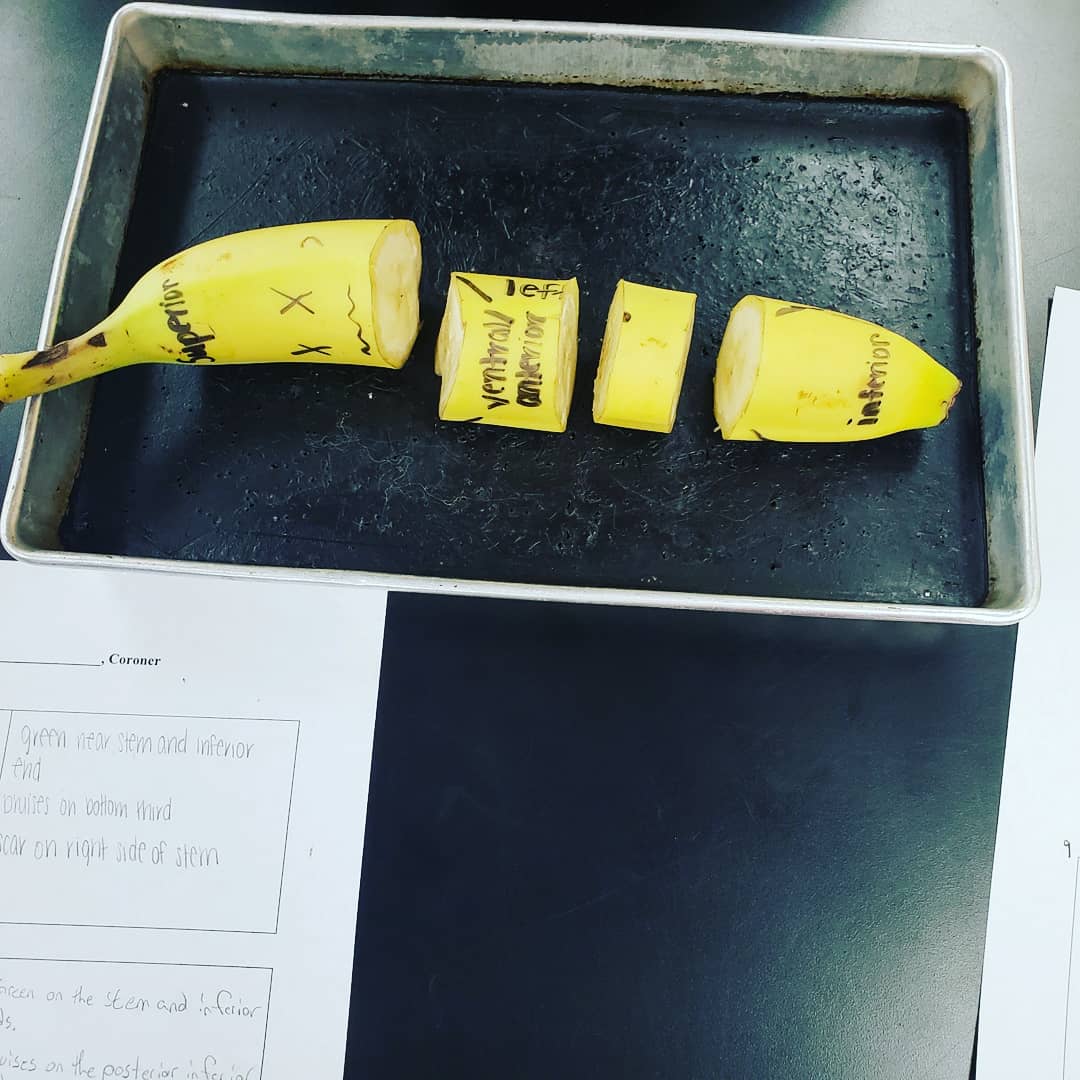
  5. Anatomy: Banana Autopsy– At the beginning of the year in anatomy, it is very 20180913_120940important for students to learn and retain anatomical terms. Throughout the year those words are used over and over again to describe the location of everything in the body, so this year I wanted to do more activities for students to practice using anatomical terms like lateral, medial, anterior, and posterior. This banana dissection lab was the MOST FUN! It’s cheap, not at all messy, and your students will love it. There are plenty of free resources you can find for this activity. I Googled “banana autopsy” and adapted one of the first resources I found to fit my needs.IMG_20180913_155031_615
  6. Anatomy: Blood Vessel Lab– There were a lot of new things I tried i

    20190623_133915
    You can use a piece of paper with a small hole in it to see the capillaries in your eyeball!

    n my anatomy class this year but I am including this lab simply because this was something I had never done and I loved it! When teaching blood vessels, I usually have them learn how to take their blood pressure with a blood pressure cuff and then we just spend time looking at different pics of arteries, veins, and capillaries and talking about their differences and functions. However, this lab gives students a hands-on and visual way of studying capillaries and veins in a way I had never done before. The lab involves seeing your capillaries by looking through a tiny hole in a piece of paper and using a rudimentary way to measure venous blood pressure so students can see the difference compared to arterial pressure. You can find this lab on TPT here: https://www.teacherspayteachers.com/Product/Arteries-Veins-and-Capillaries-Lab-585345. Here is the YouTube video I used to show my students how to see their own capillaries! https://www.youtube.com/watch?v=L_W-IXqoxHA&feature=youtu.be.

If you have any questions about these activities, please feel free to comment below or send me a message. Hope you’re all having a super summer!

signature

Reminders of October

Orange and Green Forest Fall Facebook Cover

Oh October. This is often a hard month for teachers. The honeymoon phase of September is over. The true colors of your students are starting to show (for better or for worse). Kids start testing the systems you’ve put in place to keep your classroom running smoothly. The grading is starting to pile up and it starts to feel overwhelming. The days get shorter and darker and colder and more frustrating. Where I teach, we also have parent/teacher conferences, homecoming, and the first quarter ends in October, which adds a lot of pressure and stress. Every year I get to this month and I start feeling overwhelmed by the work load, managing student behavior, and balancing all the other activities and obligations that I have in October. I also have a very strong inner critic that gets me down when I fall behind in grading or lessons don’t go as planned or my students act out. All the positive mental energy I had in August and September to tell my self that I’m doing my best, seems to gone in October and I severely criticize myself for making mistakes.

So, if you’re like me, you need a reminder this month that the job you’re doing is incredibly important and all you can do is to do the best you can. Maybe, also like me, you need a reminder of how to keep yourself mentally focused in the midst of the busyness. The following are a couple of things I need to remind myself as I look back and reflect on this month.

Focus on what you can control. I really needed this reminder this month and I think it’s is huge for teachers no matter where you teach. There’s so much we don’t have control over: the students we have, the parents of our students, class sizes, standardized testing, the obligations and requirements of our districts and our administration.  Sometimes we allow these things to frustrate us so much that we lose sight of what we CAN do for our students. It’s not worth your mental energy to agonize over things you can’t change. Focus on your relationships with your students and how you engage and teach your students better each day. Focus on the things you do have control over.

When you make mistakes, silence your inner critic. In September I feel like I have laser focus on what needs to be done in my classroom and I’m very productive and energized when I’m at school. I’m so on top of everything that needs to get to done and remember to do all the things to keep myself organized. When October hits, I start to get more and more tired and I make more mistakes in the classroom and then I criticize myself. I tell myself that a good teacher wouldn’t forget to copy the quizzes for that day or make that grading mistake or forget to buy the supplies needed for the lab or get behind on grading. Of course, everyone forgets things and makes mistakes and I need to remember this. Once I realized that I was criticizing myself so much, I am learning how to stop myself from thinking these critical thoughts trying to use more positivity self talk. I need to remind myself that I don’t have to hold myself to an impossible standard.

Have a plan for bad days. As teachers we usually do a good job of planning and being proactive to avoid problematic situations, but we should also make plans for what we do when we have bad days as school. I’m not talking about how we handle discipline, I’m talking about how we handle ourselves on days when a kid has a melt down or you have a melt down or you have an unpleasant interaction with a colleague or on days when EVERYTHING SEEMS TO GO WRONG. How can we handle these days in a healthy way rather than criticizing ourselves for making a mistake or angrily venting to another colleague or going home and eating junk food? Maybe it’s sitting between classes and taking a few deep breaths or going to a quiet place and counting to ten or going for a walk after school. Do what works for you. I’m in my 5thyear of teaching and still learning how to do this. I think that anticipating and planning for bad days before they happen makes them less awful and coping with them in a healthy way keep can keep up from getting burnt out.

giphy
Source: giphy

Give yourself and your students and your colleagues a fresh start each day. Try your hardest to forget about what happened yesterday and start each day a new. No matter how frustrated you get with the people or situations around you at work, don’t hold onto them. Start each day like it everyone gets a fresh start including yourself. Put on a smile (even if it’s just a fake smile) and focus on your students and being the best teacher you can be for them.

If you’re feeling anything like I have this month, I hope you know that you are doing a great job. Teaching can seem impossible sometimes, but you can do it. Don’t give up.

signature


Tips for Teaching Freshmen

Yellow Paper Father _ Dad Appreciation Facebook Post-2

Freshmen. You either love them or you hate them right? If you have taught freshmen, you know that they can be frustrating and tiring to teach. For example, I give my freshmen a quiz every Friday and I remind them pretty much every single day. Yet, if I had a quarter for every time a student came into my class on a Friday and said, “What? We have a quiz??? What’s on it?” I would be able to take a nice vacation to Aruba.

Image result
Source: giphy

Sound familiar? Ever since my first year of teaching I have taught mostly freshmen and those years have helped me to better anticipate the freshmen problems that frustrate me and I’ve developed better procedures to help my freshmen succeed throughout the year (and keep me sane!).


For some background, I teach in a private school and about one third of our freshmen class come from our middle school, a third from public school, and a third from other private middle schools. I also teach in a densely populated area where there is wide variety of public, private, and charter schools. All that’s to say that my freshmen are coming from all sorts of places with different procedures and expectations and it can make the transition to high school difficult. My freshmen students typically have a very large range of academic abilities and helping them all be successful can be challenging. If you feel like you might teaching similar students or daily feel frustrated by your freshmen, the following tips might be helpful to you!


  1. Be patient.


Many freshmen are still like middle schoolers when they start high school. They zone out, they day dream, they don’t listen to the directions you are giving them and it’s extremely frustrating. We’ve all been there. My biggest advice for teaching freshmen is to anticipate that freshmen need a lot of help and patience transitioning to a high school environment. When you can anticipate this instead of expecting freshmen to remember everything single thing on your syllabus you can avoid some of the frustration. Anticipate that you will need to repeat directions. Anticipate that you will need to remind them of procedures and due dates several times. Anticipate that they won’t get everything right the first time and be patient with them. It takes time for kids to transition to a new school and a new schedule. Obviously at some time during the year freshmen need to start being accountable for hearing and remembering information in class without being reminded of it a million times, but at the beginning year I find that I am able to build better relationships with students when I patiently repeat things (even if it is the 10thtime I have to repeat myself) rather than getting annoyed showing them how frustrated I am with them for not listening or forgetting.


  1. Start out the year with easier assessments to build confidence.


Sometimes I get kids who have been “bad” at school their whole lives. Sometimes I get kids who are way below reading and math benchmarks for their grade. While there are certain classes in which I give challenging quizzes and homework right off the bat, I find that with freshmen, I have had better success getting kids to “buy into” the class by making homework and assessments a little easier and then build them up to be more challenging as we go throughout the year. Imagine yourself as a student at a new school with new teachers who don’t know you teaching you a subject you don’t understand. At the beginning of the year you bomb all the quizzes and the homework and you start to feel like you can’t do well in this class so you give up before you’ve even really started. I see this happen every year. In my experience I find that giving freshmen some slow pitches at the beginning of the year builds their confidence before we get to anything too challenging. When my students feel like they can succeed in class, they are more likely to be engaged.


  1. Consider short attention spans.


Every year I feel like my freshmen have shorter and shorter attention spans. When I sit my students down to a short lecture at the beginning of the year, you would think that I was torturing them! 14 year olds have brains that are still developing and a lot of them have an attention span of 15 minutes max. I truly believe that high schoolers need to be able to sit down and successful listen to a lecture and take good notes, but many freshmen are not at that level yet. Just like beginning runners don’t start off running 10Ks, many freshmen are not ready to sit and listen to a 40 minute lecture. Beginning runners start with short distances and gradually build their endurance as their muscles and cardiovascular systems get stronger until they can run 6.2 miles. At the beginning of the year I try to break up my lecture into 10-15 minute chunks. As we go throughout the year, we get into a routine, and we can build up to being able to lecture for longer. But at the beginning of the year I keep my lectures short.


  1. Consider adopting a gracious late work policy


Late work policies can be a controversial topic and many of us have late work policies chosen for us by our administrators, however if you are able, consider adopting a gracious late work policy for your freshmen. When I first started teaching, I had the standard late work is accepted one day late for half credit policy. However, I was finding that many of my students, were not used to doing homework or studying, and they were getting overwhelmed by the work that was getting thrown at them. I also found that kids just stopped doing homework if they knew they couldn’t get better than a 50% or if they did turn it in late, their homework grades weren’t reflecting what they actually scored on the assignment. Their grade was simply reflecting that it was late. While I don’t give freshmen very much homework, I currently use a system that I got from refusetoreinventthewheel.com for late work. I accept late work up until the day of the unit test for full credit. However, for every late assignment they turn in, I take 2 points away from a separate “On Time Homework” grade that resets each quarter. This has been a game changer for me. For me, more students end up completing the assignments and their grades are more reflective of what they are actually doing while still showing how many times they turn late work in.


  1. Remember that freshmen are not done growing and changing.


My mom once told me that we shouldn’t think of middle or high schoolers as complete adults and she is completely right. I think sometimes we as teachers get really frustrated with freshmen because we are expecting them to be more mature and developed than they physically are. And that’s not their fault. We can’t expect our freshmen to be college ready or act like little, mature adults because they are only 14! I feel like we do so much hand wringing about “kids these days” and how they won’t be ready for college or the real world. But freshmen have so much growing and changing and learning to do before that! That’s what these 4 years of high school are for. Yes, freshmen are immature and forget everything and are frustrating but most of them won’t be like this forever. On my most frustrating days when the immaturity of my freshmen is really wearing me down I to remember that they are still growing. In the mean time I can give them my patience and a fresh start each day.

We all teach in different places and with different students so I would love to hear what you do with your freshmen! What are your best tips for working with this crazy and special age group?

signature

6 Ideas For The First Week of School


Graduation Pattern Facebook Cover-2Back to school time is both a scary and exciting time of the year for me. It’s scary when I think about the hard work and exhaustion the school year involves but I also feel the excitement of having brand new classes and students, seeing my colleagues again, and getting my classroom set up. When I first started teaching the first week was extremely hard to plan out. I’m so glad that I did my student teaching in during the fall semester instead of the spring semester (which was traditional in my college) because this gave me some ideas for how to structure my first couple of days of school. 4 years later, and after much trial and error, I feel like I’ve got a system down for a smooth first couple of days of school.

Below I’ve listed 6 things I do in all my classes in the first week of school. Now, these are things other than the standard going of the syllabus, setting up class rules, and handing out textbooks. These are little activities that I like to do to ease into the school year and that I’ve found that help me get to know my students, help them get to know me and each other, and give them an introduction to what my class will be like. Some of them also help me get set up at the beginning of the school year and help me see what academic skills or knowledge my students are coming to class with. Most of these ideas are not my own, but came from various teachers I’ve had or worked with. So if you’re looking for some simple things to do the first week of school read on!


  1. Notecards: I got this idea from my cooperating teaching during student teaching. The first day of school I give each student notecard and I have them write their name, their grade, and something about them on the card. Usually the something about them is something like, what is your favorite shoe or in between meals snack or color. I stay away from things like favorite TV show or movie or music which I feel makes student reveal too much of themselves before they know me or each other. (I would have been too embarrassed and shy to say what my favorite movie was in high school!). We then go around the room and share names and what they wrote on their cards. It helps me remember student names and get to know them just a little bit. Plus I keep those cards all year long and use them to randomly call on kids or divide them into lab groups!


  1. Student Survey: I used to use student surveys as a time filler and didn’t really take them seriously. I would glance over them during the first week of school, but never really read them purposefully. I realize now that student surveys can be powerful tools for getting to know students right at the beginning of the year. Today I truly believe that the key to a positive classroom environment is to build strong relationships with students and surveys are the first part of that. I make my student surveys short so that they don’t take too long to read but I try to put meaningful questions that go beyond what is your favorite food and color ect. Questions that help give me a glimpse into who they are.


  1. Games: I like play a short game with all my classes during the first or second day of school. I change it up depending on the class and the age group and I use it as a low stakes way to get kids thinking and/or talking to each other. I also think it helps break the ice and ease tensions on the first day. In one class I just do a simple trivia game that they work on with partners. I have also done classmate bingo (you can find a template here: https://www.educationworld.com/tools_templates/bingo.doc) and this dice game (https://www.youtube.com/watch?v=FqqnhnOqATY) which I love! The 4 questions they have to answer are questions about the other people in the group such as “What does the person across from you like to eat for breakfast?” or “What is one thing the person to your right like to do as a hobby?”


  1. Misconception Quiz: I got this idea from one of my college professors and I LOVE IT! Plus it’s incredibly relevant if you teach science! All you have to do is look up common misconceptions in science and put 10-15 of those misconceptions onto a piece of paper in the form of true/false questions. I try to pick things that I think kids believe. (My favorite it: “True or false: gluten is a processed ingredient used in unhealthy foods”. Most students will say true.) Have your students take that quiz and then go over the answers with them. Usually they are surprised by how many of the facts they through were true really are not. I then ask them why they think I would have them take this quiz and we discuss how basic scientific knowledge is important.


  1. Read: I like to get a grasp on my students’ reading comprehension skills right away. Within the first week, I pull out an article and have the class read it out loud together. I call on students randomly to read out loud and the rest follow along so that if I call their name, they are ready to pick up reading. After reading the whole article out loud, we talk about the main idea of the article and then I have them answer some basic multiple-choice questions that deal with reading comprehension. This allows me to see where their reading skills are at and helps me take note of any students who appear to be below the appropriate reading level right away.

6. Academic Integrity: This is something new that I am trying this year and the idea that came from Kevin Patton of the AP Professor blog. I HATE it when I catch or find out that kids have cheated on assignments I give them and this year I want to be proactive about academic dishonesty and use it as a teaching moment. This year I am going to specifically explain 3 was that students can be dishonest and how it is damaging to me, their classmates, and themselves. They are then going to sign a contract about maintaining academic integrity. You can read more about addressing academic integrity here: https://theapstudent.blogspot.com/2012/01/why-be-honest.html

As a high school teacher, I always felt the pressure to jump to content right away. And while I do believe getting into content is important,  I now like to spend the first couple of days intentionally getting to know my students and setting up my expectations for the year. I would love to hear what other teachers do! How do you structure your first week of school?

Again, the start of the year of the year can be incredibly stressful, scary, and overwhelming but it can also be a lot of fun with the anticipation of a brand new class of students. I hope you all start this school year feeling strong and ready to meet and connect with your new (or returning!) kids. Best of luck to you all!

signature


The First Post

Over the summer I read “Shattering the Perfect Teacher Myth: 6 Truths That Will Help You Thrive as an Educator” by Aaron Hogan and in one of his chapters he encourages all teachers to start a blog. He quotes John Dewey, “We do not learn from experience. We learn from reflecting on experience.” Hogan goes on to say, “…Share those reflections with others in your field. I want you to blog. I want others to learn from you. I want the world to be better because you have added your genius to it.” While I certainly don’t consider myself any sort of teaching genius, this part of the book really spoke to me! I had been thinking hard about starting a teaching blog for several months, however I was worried about what I would write, finding time to write, and afraid of opening up about my teaching life on the Internet. However Hogan’s book put blogging into perspective for me and here I am! I really love teaching and learning and I enjoy challenging myself so starting and maintaining a blog seems like a good and natural goal for me.

When I first started teaching there was a lot I didn’t know. When I graduated from college with a degree in Broad Field Secondary Science Education, I had learned about pedagogy and curriculum, but when it came to the nitty-gritty, everyday grind and routine of teaching I had a lot to learn. That’s when I turned to the Internet and found a number of extremely helpful teaching blogs. Reading about REAL teachers in REAL classrooms trying to solve REAL problems helped me get through my first year or two of teaching and it is part of what has brought me to blogging.

I started a teaching Instagram feed about 7 months ago and called it Teaching Science In Real Life because that is what I needed and that’s what I found on the teacher Internet community in my first years of teaching. So much of my teacher education had been theoretical and I needed to see what real teachers did. Many of the strategies (especially classroom management and procedures) that I use on a daily basis are ideas that I have gotten from various blogs across the Internet from teachers who were honest about what worked and what didn’t in their classrooms. So above all, my goal for this blog is for it to be authentic and genuine about what my teaching life in the secondary classroom is like. Not every day in teaching is great, but I promise to be honest and share my joys as well as my struggles.

What can else expect from this blog? I will be sharing the lessons and management strategies I use in a secondary classroom, reflecting on new things I am trying and learning in my classroom, and sharing my teacher life. There are so many great blogs out there about teaching, but I found it hard to find a lot of blogs written by high school teachers. That said, I specifically want to share some classroom management tools that relate to science classrooms in the next months. I think it’s just as important for high school teachers to focus on concise classroom management as it is for elementary teachers. Additionally, I have a passion for incorporating reading and writing skills into the science classroom and for creating engaging lab activities. I hope to share lots of ideas in these areas in the months to come!

I am so excited to start this journey and to collaborate with you and other educators across the World Wide Web!

signature