Well, it’s mid-July and we are slowly starting to get a picture of what our schools might look like next year, but there is so much uncertainty around what teaching will actually be like. I think one thing we can plan on for sure is that we won’t be able to lab and group activities the way we normally do. With the threat of Covid still so prevalent, I imagine that we won’t be able to put students into small groups in close proximity to each other to work on a lab. Which is so sad! I always think labs are best parts of science class, but we will have find to some other ways to engage our students in our content. One way I think we can do this is by using demonstrations frequently whether it’s in front of a group of students or whether it is done virtually over a Zoom or Google Hangout session. Demonstrations are done by the teacher while students watch and make observations and can be used to show a process, illustrate a concept, or be an analogy for a difficult concept. Demonstrations done in real time in front of students can help draw their attention and give them greater clarity about difficult topics.
I’ve been brainstorming and made a list some demos I will probably be using in my anatomy classes next year. Some are demos I’ve done before and some are labs that I just won’t be able to have students do. Also, while some are high school specific, others would work just as well in a middle school class learning about body systems.
- Rubber Band Chicken Bone
You might be familiar with this experiment where you put a chicken bone (from a rotisserie chicken for example) into a jar of vinegar for 5 days or so and the vinegar reacts with the calcium in the bone dissolving it and leaving behind a bendy bone made of collagen. Instead of doing this as a lab with students in groups, you could easily set this up ahead of time and show it to the whole class as a demo in person or over zoom. You could use this as a simple way to illustrate the importance of calcium in bones but you could also make it more inquiry-based with older students. You could show them the bendy bone and then have students hypothesize about what happened and what is left behind in the bone before they do research to discover what actually happened.
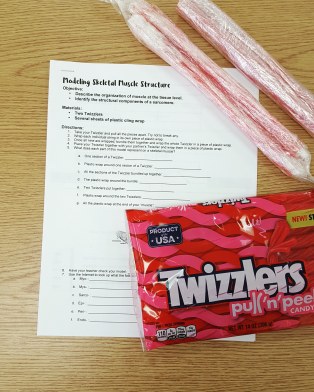
- Twizzler Muscle Model
Muscles are pretty complex organs and my students usually have some trouble understanding the structure of muscles and how they work to contract and relax. I think this Twizzler model activity to be a helpful model for how muscles are bundles of bundles of different fibers that work together. I normally have students do this as a group activity with Twizzlers, but I still think this activity would be valuable as a demonstration in-person or virtually followed by a class discussion. I envision doing this in front of my students and having them identify each bundle and the layer of connective tissue around it as I work to put the bundles together to make a completed muscle. The most difficult part of this is that you probably won’t be able to let students eat the extra Twizzlers you have! 😦
- Chicken Wing Dissection
A chicken wing dissection is a versatile lab that you could use in high school or middle school and I think you could still use this as a demo, although I’m not sure if it would translate well virtually (if you or your students don’t have a great Internet connection it could be difficult to see all the structures). I think that dissecting a chicken wing (here is an example of I have my students do) is great for showing the difference between tendons and ligaments and you can pull on the different muscles of the chicken and show students how muscles pull on bones to create movement. I also got comments from students last year saying they never thought about meat as being muscle which is a good lesson too. Again, I’m not sure how well this would translate as a demonstration over the Internet, but chicken wings are pretty easy to get, so maybe you could have students do this on their own at home and document what they learned.
- Blood Types
I love this demonstration and its so helpful in showing students which blood types can be donated and excepted by other types! All you need are clear cups, water, and some food coloring. You can read about this demonstration here. You might also want to discuss what ACTUALLY happens when blood types mix (agglutination) so they have an idea of why it’s dangerous to mix blood types.

- Reflexes
I normally like to have students test each other’s reflexes but I don’t think that will possible next year. I usually have them test the patellar, bicep, tricep, and the Babinski reflexes. However, I think you might be able to do this as a demo in front of the whole class. If you are in school, you could maybe demonstrate these on a colleague? I’m not sure. You could also demonstrate these virtually to students by testing them on a spouse or roommate. Of course, you can always show YouTube videos of these reflex tests, but it might be more fun for students to see you actually demonstrate on a real person. Also, if you don’t have a reflex hammer laying around, you can make one out of popsicle sticks, rubber bands, and a rubber eraser and it works pretty well.

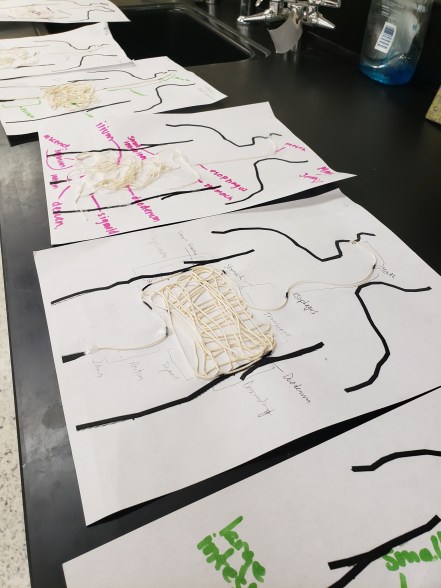
- Digestive System Model with String
You can find plenty of activities online for modeling the length of the digestive system. You could show the actual length of the digestive system or one that models it with string to a smaller scale. I had students do this individually last year during online teaching (the did an assignment like this one from Biology Corner), but you could also demonstrate it front of a classroom and maybe also online during a virtual lesson.
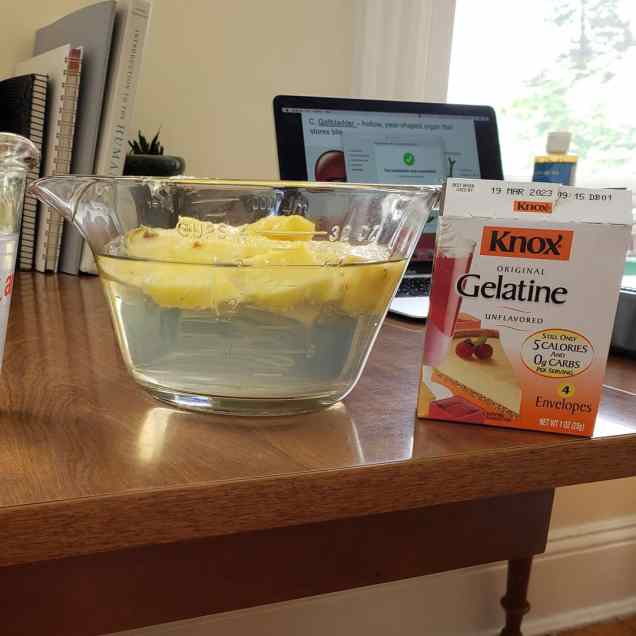
- Digestive Enzyme Demo
I wrote about this in a previous blog post, but this a great demo that you can easily do in front of a group of students or virtually. I used gelatin, pineapple, cornstarch, iodine, oil, and soap to demonstrate the digestion of sugars, protein, and fats. It’s a great way to reinforce that there are specific enzymes for specific nutrients and that they get digested in different areas of the digestive system.
- Egg in a Jar
This a simple and powerful demonstration of the important of cerebrospinal fluid around the brain and impact of traumatic brain injuries. All you need is an egg in a jar of water and you will find that when you shake the jar, the egg can break when if it hits the side of the jar. It’s a good example of how helmets in sports only go so far in protecting the brain. I also like to show this video of a real brain that shows students how soft and vulnerable the brain is. (Disclaimer: this video is might not be appropriate for all students. I only show it to high schoolers.)
- Lung Model
My school has one of these lung models where there are balloons inside a large container and you can pull down on a rubber diaphragm to make the balloons inflate and deflate like the lungs. The way that pressure changes inside the thoracic cavity allowing air to enter and leave the lungs can be really confusing for students so I like to have a good visual, but if I had to teach from home, I wouldn’t have this model so I suppose I could make one out of a plastic bottle and balloons and show students over a Zoom session how inhalation and exhalation work. I also think this model could work too. It uses balloons, straws, and a glass of colored water and is supposed to be a model of how the heart beats. However, because the increased air pressure is pushing the water of the straw, I think it could work to demonstrate exhalation.
- Blood Model
I loved doing this model with middle school students, but I think it could work as a demo in a high school class too. I have used cheerios, navy beans, lentils, and water to represent the different parts of blood but there are a variety of things you can use. I would make sure the emphasize the different amounts of each of these components. Make sure students understand that blood is mostly plasma followed by red blood cells, white blood cells, and platelets.
If you are a science teacher, I hope you find this helpful and that some of these will work for your classroom. I would love to hear if you have any other demonstrations you plan on doing in an anatomy or human body systems class or any other ways you plan on adapting your class for the upcoming year!
Take Care!



 Teaching Science IRL